
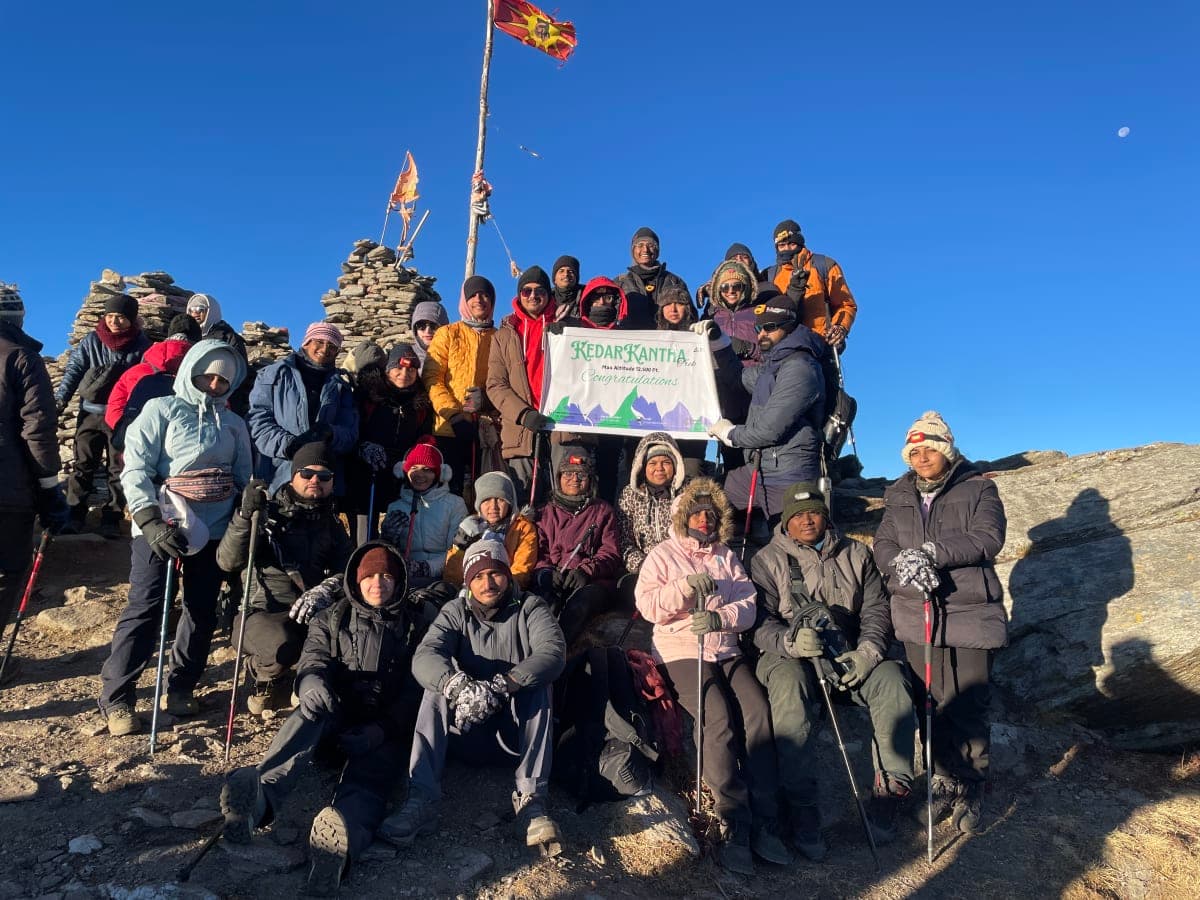
Highlight
Food provided by Indian Treks on all trek days
Mountain expert support: +91-7310954451 | +91-7300900108
Fixed daily departures Nov 2026 – Mar 2027 — pick a batch in Fixed Departures; it syncs to booking
Altitude 12,500 ft · 5 days · 20 km · Base camp Sankri · Easy to Moderate
360° summit panorama — Swargarohini, Bandarpoonch, Black Peak, Gangotri ranges
Queen of Winter Treks — best snow experience December to April
Kedarkantha Trek
The Queen of Winter Treks
At 12,500 ft, Kedarkantha is one of India's most loved winter summits — pine forests, frozen Juda Ka Talab, and 360° views of Swargarohini, Black Peak, and Gangotri ranges from Govind Wildlife Sanctuary.
Kedarkantha Summit Trek is the perfect winter Himalayan adventure for beginners and seasoned trekkers alike.
Starting from Sankri village, the 20 km trail passes Juda Ka Talab, Kedarkantha Base Camp, and Hargaon before the exhilarating summit push at dawn.
Often crowned the Queen of Winter Treks, Kedarkantha transforms into a snow paradise from December to April.
March and April bring blooming rhododendrons and mirror-like reflections at Juda Ka Talab.
The finest summit climb for beginners
Kedarkantha is one of the most iconic summit treks in India. It provides the perfect opportunity for beginners to feel the thrill of climbing a mountain peak.
We can hardly think of any other peak trek that can be attempted by beginners. Maybe Deoriatal Chandrashila comes close. But it is more about the views from the summit and the forests leading to it. The final push, being on a pilgrim trail, doesn’t feel as wild and raw as it is at Kedarkantha.
What do treks like Kedarkantha look like in Jan and Feb? Find out here.
You catch your first glimpse of the Kedarkantha peak right at the start of the trek. Soon after, the trail leads you into a beautiful forest that briefly hides the summit from view. As you emerge from the forest, the peak looms over you again. It is from the Bhoja Dadi campsite that the steep climb to the summit begins. It’s a tough ascent, especially in winter snow. But it feels more thrilling than daunting—a challenge that draws you in rather than holds you back. Reaching the summit is a deeply rewarding experience. The views are spectacular with Mt. Swargarohini, the Bandarpoonch massif, Mount Kalanag and the Gangotri massif lining the horizon.
But Kedarkantha isn’t just about the summit. You walk through pristine forests of pines, oaks, and maples. You camp in stunning clearings with wide-open views and unforgettable sunsets. You get a rare glimpse into the lifestyle of the villagers in Kotgaon.
In winter, when most Himalayan summits are shut down by heavy snow, Kedarkantha remains open. It’s a one-of-a-kind chance to summit a Himalayan peak in peak winter. That’s what makes it special. That’s what makes Kedarkantha India’s most popular winter trek.
But we often forget that Kedarkantha is an equally beautiful trek in the other seasons.
In spring, the forests above Kotgaon burst to life with blooming rhododendrons and birdsong. By summer, the clearings at Khujai and Bhoja Dhadi, along with the surrounding forests, turn lush and green. As the season moves on, wildflowers start to show up along the trail. In autumn, the whole landscape changes. The forests turn golden with shades of yellow, brown, and red. Instead of snow, you trek through grassy meadows and rocky patches on your way to the top. The Kedarkantha peak still stands tall, calling you to take on the climb. And when you reach the summit, the views are crystal clear.
Why travellers love it
Day wise plan
A complete day-wise plan for Kedarkantha Trek covering drives, trail sections, altitude gain, meals, and overnight stays from start to finish.
Total distance: 190 km · Duration: 8–9 hours · Mode: Tempo Traveller · Elevation: Sankri Base Camp, 1,920 m (6,400 ft) · Overnight: our partner hotels in Sankri.
Indian Treks organizes transport for trekkers from Dehradun Railway Station in the morning. Vehicles leave for Sankri around 6:00–7:00 AM — report on time so the group can depart together. The drive follows the standard hill road via Mussoorie, Nainbagh, Naugaon, Purola, Mori, and Netwar.
Uttarakhand's capital, Dehradun, is one of India's most beautiful cities. Rajpur Road is the area's main attraction; as you drive along it, you get an early sense of Dehradun's charm before heading toward Vikasnagar and the mountain road beyond.
The road to Sankri, the base camp for many famous Himalayan treks, is a journey in itself. Starting from Dehradun, the drive takes you through winding mountain roads, lush valleys, charming villages, and dense forests — a taste of Himalayan beauty before the trek even begins.
Dehradun to Mussoorie and Nainbagh: The road climbs from Dehradun through Mussoorie and Nainbagh toward the Yamunotri–Gangotri hill highway.
Naugaon to Purola: From Naugaon the route continues along the Tons valley toward Purola — the main motorable corridor used by Kedarkantha groups.
Purola to Mori and Netwar: After Purola, the road follows the Tons River through Mori and Netwar, the gateway to Govind Pashu Vihar.
Charming villages and forests: The route is dotted with small hamlets and farmlands. Terraced fields, apple orchards, and wooden houses showcase the simple yet beautiful lifestyle of mountain communities. Pine and deodar forests line the roads, adding freshness to the journey.
The valleys and Tons River: Approaching Sankri, you enter the breathtaking Tons River Valley. The turquoise river flows gracefully between lush green mountains, offering postcard-perfect views that make the drive unforgettable.
The final stretch: The last leg takes you through dense forests and narrow mountain roads. Though the drive can be adventurous, unfolding vistas of snow-capped peaks make every turn worth it.
Arrival at Sankri: Finally, you reach Sankri (6,400 ft), a serene village nestled in the Western Garhwal Himalayas. Stunning views of Swargarohini peaks, vibrant sunsets, and starry skies welcome you warmly before the trek begins.
Check in at the hotel, freshen up, and enjoy evening snacks with mountain views. After a short trek briefing and an optional village walk, return for dinner and an overnight stay in Sankri.
Trek distance: 5 km · Duration: 4–5 hours · Travel method: on foot · Elevation: Juda Ka Talab, 2,700 m (9,000 ft) · Accommodation: shared camp in tents.
Today, a warm morning awaits you. Feel the peace in the mountains — no connectivity or distractions, just the quiet of the Himalayas.
Enjoy a cup of coffee or tea at 6:00 AM and breakfast at 7:30 AM. The group departs at 8:30 AM, following your trek leader's instructions.
The trek from Sankri to Juda Ka Talab on the way to Kedarkantha is an enjoyable walk through the lush forests of Uttarakhand's Govind National Park. Here are the highlights along the trail:
Sankri (base camp): Your trek begins from the quaint village of Sankri (6,400 ft). Surrounded by snow-clad peaks, apple orchards, and lush meadows, Sankri is a picture-perfect Himalayan hamlet that sets the tone for the journey ahead.
Forest trail: As you leave Sankri, the trail leads into dense forests of pine, oak, and rhododendron. The walk is refreshing, with the fragrance of pine in the air and birdsong all around. In spring, blooming rhododendrons add splashes of red and pink, bringing the forest to life.
Scenic views along the way: Every now and then, the trees open up to reveal glimpses of mighty Himalayan peaks. On clear days, you can spot the Swargarohini range, Bandarpoonch, and Black Peak in the distance — each view more rewarding than the last.
Water crossings: The route is sprinkled with small streams and natural water crossings. These make for refreshing halts — refill bottles, rest, and soak in the serenity of the surroundings.
Kedarkantha Base Camp: After a steady climb of a few hours, you pass Kedarkantha Base Camp — a wide-open meadow nestled at the foot of the peak. The campsite offers breathtaking panoramic views of the surrounding mountains, especially at sunset when the sky turns golden and the peaks glow in soft hues.
Juda Ka Talab: The trail continues through forests and meadows until you reach Juda Ka Talab, one of the most scenic campsites on the trek. This small alpine lake is surrounded by pine trees and open grasslands. In winter, it often freezes over; in summer, its clear waters beautifully reflect the surrounding peaks. With Kedarkantha Peak standing tall in the backdrop, this campsite offers a truly magical experience.
Mountain views: From Juda Ka Talab, Kedarkantha Peak feels much closer, building excitement for the summit ahead. Crisp mountain air, starlit skies at night, and the peaceful atmosphere create the perfect Himalayan camping experience.
The trek from Sankri to Juda Ka Talab is admired for its natural beauty and moderate difficulty — ideal for both beginners and seasoned trekkers. The trail passes through dense forests, open meadows, and occasional clearings with glimpses of snow-capped peaks.
While the route is well established, it is always advisable to trek with a guide or in a group. Mountain weather can change quickly, and an experienced local guide ensures both safety and a richer experience — sharing insights about the flora, fauna, and culture of the region while helping you navigate the trail with ease.
Trek distance: 3 km · Duration: 2–3 hours · Mode: on foot · Altitude: Kedarkantha Base Camp, 3,200 m (11,250 ft) · Night stay: twin-share camp tents.
The trek from Juda Ka Talab to Kedarkantha Base Camp is a crucial part of the Kedarkantha journey in Uttarakhand. It offers amazing views of the Himalayan landscape. Here is an overview of the route and what you can expect along the way.
Juda Ka Talab: Your day begins at Juda Ka Talab (9,000 ft), a stunning alpine lake surrounded by meadows and tall pine forests. The clear, still waters often mirror the surrounding peaks, creating a picture-perfect and peaceful setting. Take a moment to enjoy the quiet beauty of this unique campsite before moving ahead.
Gradual ascent: From Juda Ka Talab, the trail to Kedarkantha Base Camp involves a steady but gradual climb. The path winds through open meadows and thick forests — in winter, often blanketed with fresh snow. Proper footwear and trekking poles are essential here for balance and safety.
Views of Kedarkantha Peak: As you gain altitude, Kedarkantha Peak appears more frequently on the horizon. Its snow-clad summit becomes an inspiring sight and a constant reminder of the goal ahead.
Pine forests and meadows: The trail alternates between dense pine forests and vast meadows. In snowy conditions, the forests look enchanting — tall, snow-dusted trees lining the trail like a fairytale setting.
Mountain vistas: Throughout the trek, views keep opening up to reveal spectacular Himalayan ranges. On clear days, you can spot the Swargarohini peaks, Bandarpoonch, Black Peak, and the Gangotri–Yamunotri ranges. These vistas grow even more captivating as you climb higher.
Kedarkantha Base Camp: After a few hours of trekking, you reach Kedarkantha Base Camp (11,250 ft). This wide meadow is surrounded by towering peaks and offers 360° Himalayan views. The peak itself stands prominently in front of you — an ideal spot to rest, acclimatize, and prepare for the final summit push.
Snow in winter: If you are trekking in winter, the trail and campsite are often covered in snow, turning the base camp into a magical white wonderland. While it adds a layer of challenge, it also enhances the beauty and thrill of the experience.
Kedarkantha Base Camp is a favorite overnight halt before the summit push. Nestled in a wide meadow with stunning views of surrounding peaks, it offers the perfect setting to rest and acclimatize. Crisp mountain air, starlit skies, and the calm, quiet atmosphere make it an ideal place to recharge for the exciting summit climb the next morning.
Trek distance: 11 km · Duration: 7–8 hours · Mode: on foot · Altitude: Hargaon Thach, 2,645 m (8,675 ft) · Night stay: twin-share camp tents.
Summit day: Today is the highlight of your trek. Wake up early around 3:30 AM and begin your climb to the Kedarkantha summit. The trail is steep but rewarding, and reaching the top just in time for sunrise is an unforgettable experience. As the first rays of the sun light up the snow-covered peaks, the 360° Himalayan panorama leaves every trekker spellbound. Watching the golden sunrise from the summit is a moment that stays with you forever.
The Kedarkantha Summit is the final destination of the trek, offering breathtaking 360° views of the surrounding Himalayan ranges. The route from Kedarkantha Base Camp involves a steady ascent through meadows and snowy ridges, gradually leading to the steep final climb. Once at the top, trekkers are rewarded with a panoramic sight of Swargarohini, Bandarpoonch, Black Peak, and the Gangotri–Yamunotri ranges — the most memorable moment of the entire journey.
Starting from Kedarkantha Base Camp: The final ascent begins from the high-altitude meadow of Kedarkantha Base Camp (11,250 ft) — the launching point for the most awaited part of the trek.
Early start: To witness the magical sunrise, trekkers usually begin the climb well before dawn (around 3:00–3:30 AM). Starting early also ensures firmer snow underfoot and clearer skies.
Ascent through alpine meadows: The initial section is a gradual climb across wide alpine meadows. As you move higher, the terrain opens up and the path alternates between rocky patches and stretches of snow.
Snow-clad terrain (in winter): During winter, the route remains blanketed in thick snow, making the ascent both challenging and enchanting. Trekking poles and proper footwear are especially important here for stability.
Expansive mountain views: With every step higher, the horizon expands. Majestic Himalayan peaks such as Swargarohini, Bandarpoonch, Kalanag (Black Peak), and parts of the Gangotri–Yamunotri ranges reveal themselves. The closer you get to the summit, the more awe-inspiring the views become.
Kedarkantha Summit (12,500 ft): After a few hours of climbing, you stand atop the snow-clad Kedarkantha summit. A 360° panorama of the Garhwal Himalayas unfolds before you. On one side lies the grandeur of the Swargarohini and Bandarpoonch ranges; on the other, the Har Ki Dun Valley stretches out beautifully below. The shrine at the summit and the golden glow of sunrise together make this the most unforgettable moment of the trek.
The Kedarkantha summit, standing tall at around 12,500 ft (3,800 m), is famed for its breathtaking 360° panoramic views of the Himalayas and valleys below. It is one of the most cherished spots for trekkers — especially at sunrise, when the first rays paint the snow-clad peaks in shades of gold and orange.
After celebrating at the summit, descend through forest trails and meadows to Hargaon Thach — your campsite for the night. The long day ends with a well-earned dinner and rest under starlit skies.
Trek distance: 4.5 km (2–3 hrs) + 190 km drive Sankri to Dehradun · Mode: on foot, then Tempo Traveller.
This morning, enjoy a hearty breakfast at your final campsite. After packing up, begin your descent from Hargaon to Sankri. The trail is easier downhill and takes you through beautiful forest clearings and scenic viewpoints. As you get closer to Sankri, you'll pass charming apple orchards before reaching the village — marking the end of your unforgettable Kedarkantha journey.
Hargaon campsite: Your final day of trekking begins at Hargaon (8,500 ft), a peaceful campsite nestled in dense forests. Quiet surroundings, chirping birds, and rustling leaves create a soothing farewell to the mountains.
Descend through forests: The trail from Hargaon to Sankri is mostly a descent through thick pine and oak forests. Unlike the alpine meadows higher up, this section offers a different charm — tall trees lining the path and cool shade throughout.
Mountain views: Even on the way down, you'll catch occasional glimpses of snow-covered Himalayan peaks through openings in the forest. Sunlight and shadow filtering through the trees add to the beauty of this stretch.
Passing through villages: As you near Sankri, the forest gradually gives way to villages and terraced fields. Simple wooden houses, apple orchards, and friendly locals offer a glimpse into the traditional lifestyle of the region.
Sankri — trek ends: Your journey concludes as you arrive back in Sankri (6,400 ft), the quaint Himalayan village where the adventure began. Surrounded by lush green landscapes and snow-clad peaks, Sankri is the perfect place to celebrate the completion of your Kedarkantha trek.
Departure from Sankri: Enjoy your last breakfast with the Indian Treks team at Sankri. After a certificate distribution ceremony and memorable group photos, it's time to bid farewell to the mountains.
Indian Treks arranges transport from Sankri to Dehradun Railway Station, departing around 11:30 AM. The drive takes you through the same scenic valleys and villages, with expected arrival at Dehradun between 9:00–10:00 PM.
With hearts full of memories and new friendships, your Kedarkantha trek with Indian Treks comes to a close.
Itinerary route map
5-day Kedarkantha itinerary — Day 1 drive via Naugaon, Purola, Mori and Netwar to Sankri; Days 2–4 trek to summit and Hargaon; Day 5 return to Dehradun.
Text route list (accessible alternative to the map)
Elevation profile
Distance-based altitude chart for Kedarkantha Trek using verified trek segment distances. Hover or drag across the profile to explore each stage.
| Day | Location | Altitude | Distance | Duration | Δ from prev. |
|---|---|---|---|---|---|
| Day 1 | Dehradun Railway Station | 6,400 ft (Sankri) | 190 km drive | 8–9 hrs | — |
| Day 2 | Juda Ka Talab | 9,000 ft (Juda Ka Talab) | 5 km | 4–5 hrs | +6,900 ft |
| Day 3 | Kedarkantha Base Camp | 11,250 ft (Base Camp) | 3 km | 2–3 hrs | +2,250 ft |
| Day 4 | Kedarkantha Summit | 12,500 ft (summit) | 11 km | 7–8 hrs | +1,250 ft |
| Day 5 | Dehradun Railway Station | 6,400 ft (Sankri) | 4.5 km trek + 190 km drive | 2–3 hrs trek + 8–9 hrs drive | -10,400 ft |



Inclusion & exclusion
A detailed overview of everything included in your Kedarkantha Trek package — stays, meals, permits, transport, and trek support — along with the costs you should plan for separately.
Inclusions
Exclusions
- Bag offloading is charged at ₹1,600 per bag.
- Maximum weight per offloaded bag should not exceed 10 kg.
- All package prices are quoted before 5% GST.
Safety Precautions and Protocols
Eleven essential safety measures for the Kedarkantha Winter Trek — from acclimatization to altitude sickness awareness.
1. Acclimatization
- Spend time at Sankri Base Camp (6,400 ft) before ascending
- Follow “climb high, sleep low” with short acclimatization hikes
- Walk slowly; practice light yoga and Pranayama
2. Weather Preparedness
- Check forecast; delay if heavy snowfall or storms predicted
- Carry waterproof jacket, poncho, and rain cover
- Start early; reach camp before afternoon weather shifts
3. Hydration and Nutrition
- Drink 3–4 litres of water daily in small sips
- Carry dry fruits, energy bars, jaggery, glucose biscuits
- Avoid alcohol, smoking, and excess caffeine
4. Health and First Aid
- Carry Diamox, pain relievers, bandages, antiseptic, ORS
- Inform trek leader of pre-existing conditions
- Learn basic first aid and altitude sickness management
5. Safety Gear
- High-ankle waterproof trekking boots with good grip
- Layered clothing: thermals, fleece, down jacket, waterproof shell
- Headlamp, trekking poles, microspikes, gaiters, gloves, rain cover
6–11. Emergency, Navigation, Wildlife, Group, Environment, AMS
- Nearest hospital: Mori (21 km from Sankri); carry emergency contacts
- Always follow guide; stay on marked trails
- Store food properly in Govind Wildlife Sanctuary
- Maintain visual contact in group; single-file on narrow trails
- Leave No Trace — carry all waste back
- AMS symptoms (headache, nausea, dizziness): inform leader immediately and descend if needed
Indian Treks — local experts from Dehradun and Sankri with 25+ years of Himalayan experience — prioritize your safety at every step with trained guides, equipment, and on-ground support.
Delicious & Nutritious Food During Trek
Fresh, high-altitude meals designed for energy and warmth — breakfast, lunch, evening snacks, and dinner prepared by experienced cooks.
Breakfast
- Beverages: ginger/masala tea, coffee, orange juice
- Light: veg sandwiches, jam and butter
- Indian: cheese/masala omelettes, aloo paratha with curd, poha, porridge, chole bhature, aloo poori, upma, mix veg vermicelli
Lunch
- Fresh roti, seasonal vegetable sabzi, paneer bhurji, paneer butter masala
- Dal tadka, dal makhani, jeera rice, peas pulao, chole masala, rajma masala
- Raita or curd on the side
Evening Tea & Snacks
- Tea, coffee, hot chocolate; vegetable/tomato/sweet corn soups
- Bread pakoda, veg pakoda, Maggi, french fries, samosa, popcorn
Dinner
- Shahi paneer, mattar paneer, rajma with jeera rice, roti/paratha with sabzi
- Dal tadka, aloo-gobhi, fried rice/noodles with veg manchurian
- Desserts: gulab jamun, sooji halwa, gajar halwa; Bournvita with hot milk
Best Time to Visit Kedarkantha Trek
Kedarkantha Trek runs best during December - April. Timing changes the trail conditions, the views, and how busy the route feels, so here is what to expect across the year.
December - April: Peak Season
This is the window Kedarkantha Trek is built around. Trails are at their best, campsites are fully operational, and departures run every month with the largest choice of dates.
- Daytime temperature: 6°C – 12°C
- Night temperature: -5°C – 4°C
- Snow: consistent snow cover on the upper trail
- Crowds: high on weekends, quieter on weekday batches
Shoulder Season: Fewer Crowds
Just before and after the December - April window the route stays open but the groups are smaller. Conditions are slightly less predictable, and the reward is a much quieter trail.
- Daytime temperature: 10°C – 18°C
- Night temperature: 2°C – 8°C
- Rainfall: light and infrequent
- Crowds: low to moderate
Off Season: Limited Access
Outside the main window the higher sections can be blocked by snow, monsoon damage, or forest department closures. Departures are paused and we recommend planning inside the December - April window instead.
- Trail access: partial or closed on the upper route
- Views: can be excellent on clear days
- Support: limited stays and transport near the base
- Crowds: very low
Kedarkantha Trek Packing List — Gear Up for the Ultimate Winter Adventure
Kedarkantha Trek is one of the most popular high-altitude treks in India, offering breathtaking views and an immersive experience in the lap of the Himalayas. Since it is a winter trek with challenging terrains and cold temperatures, packing the right gear is essential for a safe and enjoyable journey. To make it easier, we have prepared this guide following a head-to-foot approach, ensuring you carry everything necessary for a comfortable and secure trek.
Headgear and Accessories
Your head is one of the most exposed parts of your body while trekking, and protecting it from harsh weather conditions is crucial. From shielding yourself against the sun to keeping warm in freezing temperatures, the right headgear can make a huge difference in your comfort and safety.
- Headlamp with extra batteries — Essential for nighttime or low-light walking. Choose a headlamp with long battery life and adjustable brightness, and keep spare batteries on hand.
- Hats or caps — A woolen cap or beanie keeps you warm at night; a wide-brimmed hat or sun cap protects you from sunburn during the day. Pick a cap with an adjustable strap so it stays put in high gusts.
- Sunglasses — High-altitude snow glare can be severe. UV-protected sunglasses with a snug fit and side coverage lower the risk of snow blindness.
- Buff/balaclava — A lightweight, multipurpose cloth for use as a headband, face mask, or neck warmer. A fleece-lined balaclava is especially useful in freezing temperatures.
- Ear muffs or a woolen headband — Your ears are vulnerable to frostbite in extreme cold. A woolen headband or ear muffs keep you warm while allowing airflow on long treks.
Clothing Guide for High-Altitude Trekking
Layering for Different Seasons


How to Reach Kedarkantha Trek Base Camp
Kedarkantha Trek starts from Dehradun, reached through a multi-stage journey. Plan to arrive a night before your batch reporting time.
Directions to Dehradun
Jolly Grant Airport is the domestic airport serving Dehradun, with frequent flights from major metros across India.
Dehradun Junction is the nearest railway station, with excellent connections to major cities across India.
Dehradun has an extensive, well-connected road network. From Delhi and surrounding cities you can drive yourself, hire a cab, or use regular bus services thanks to the highway links in the region.
Dehradun to Sankri (190 km · 8–9 hrs)
Take NH 7 from Dehradun to the hill station of Mussoorie — the usual start of the mountain leg.
Continue on NH 7 from Mussoorie toward Purola. This stretch offers scenic mountain roads through the Garhwal hills.
From Purola, proceed to Mori and follow signs toward the Sankri / Govind Pashu Vihar corridor.
The final leg from Mori to Sankri is well marked — Sankri is the last motorable village and Kedarkantha base camp.
Indian Treks arranges pickup from Dehradun Railway Station around 6:00–7:00 AM (report by 7:30–8:00 AM on batch day).
Relaxing group transport by Bolero, Tempo Traveller, or similar. Contact your trek coordinator if you wish to upgrade your vehicle.
Drop-off Information
Prince Chowk, Dehradun is the specified drop-off point on return.
Reach Prince Chowk between 6:30 and 7:30 PM. Plan your onward journey after 9:00 PM.
Return transport from Sankri is arranged around 11:30 AM after the certificate ceremony and group photos.
About 6 km — roughly 25 minutes from Dehradun Railway Station to Dehradun Bus Stand (ISBT).
About 30 km — roughly one hour from Dehradun Railway Station to Jolly Grant Airport.
Adding a buffer day is highly recommended. If you do not need it for connections, use it to explore Dehradun, Mussoorie, or Rishikesh.
Policy
Booking, cancellation, refund, and participation terms so you know exactly where you stand before joining Kedarkantha Trek.
| Policy Point | Details |
|---|---|
| Pickup Time | 7:30 to 8:00 AM from Dehradun Railway Station |
| Drop Time | 7:30 to 8:00 PM at Dehradun Railway Station |
| Pickup & Drop | Dehradun Railway Station — Tempo Traveller or similar |
| Food | All meals provided by Indian Treks as per itinerary |
| Booking Confirmation | Seat confirmed after advance payment is received |
| Balance Payment | Remaining amount before departure as instructed by the team |
| ID Requirement | Valid government photo ID mandatory for forest permits |
| Operational Changes | Itinerary may adjust for weather, road, or safety reasons |
Departures and route decisions remain subject to weather, road access, local administration, and safety conditions. Final operational calls are always taken in the interest of the group.
FAQ's
Common questions about Kedarkantha Trek — difficulty, altitude, fitness, permits, stays, and what to expect on the trail.
November to April is ideal for snow and picturesque peaks. Avoid June–September monsoon when trails become difficult.
December–April: daytime highs around 8°C, nights -5°C to 3°C. December summit nights can feel much colder with stronger winds.
Summit elevation is approximately 12,500 ft (3,810 m). The total trail is about 20 km through Govind Wildlife Sanctuary.
Sankri to Kedarkantha and back is 20 km over 4 trekking days, plus travel days from Dehradun — 5 days total Dehradun to Dehradun.
Easy to moderate — popular with first-timers. Gradual ascents, well-marked trail, most challenging section is summit day.
Snow is typical December through third week of April, with peak winter December–February.
Tempo Traveller or SUV (Tata Sumo class) from Dehradun to Sankri and return. Trekking is on foot.
High-ankle trekking boots with good grip — Woodland or Forclaz 500 recommended. Normal sports shoes are not suitable.
Gentle inclines, scenic forests, streams, and maple/pine woods. Trekking poles help on snow. Daily distance 4–6 km at comfortable pace.
Yes. Rated easy to moderate — starts 6,400 ft, summit 12,500 ft without extreme steep sections. 5–6 hours walking per day with expert guides.
Low difficulty except base camp to summit section. Average daily distance 4–6 km makes it manageable for newcomers.
Recommended 60L backpack; keep personal load under 10 kg. Offloading available at extra cost.
Average -15°C to 5°C at altitude; high chance of snowfall; strong winds at 12,500 ft.
Comfortable temperatures, clearer skies, easier camping. Juda Ka Talab may not be fully frozen yet — different but equally beautiful.
No. Kedarnath is a sacred Shiva temple pilgrimage; Kedarkantha is a trekking peak ~100 km away in Uttarakhand.
Woollens, windproof jacket, trekking shoes, poles, sunglasses, sunscreen, torch, toiletries, medicines, raincoat, ID, insulated bottle, fleece jackets.
Valley Of Flowers, Brahmatal, Nag Tibba, Tungnath, Kuari Pass and more.
₹5,499 per person Dehradun to Dehradun including transport, meals, accommodation, guide, and trek support.
5 days 4 nights from Dehradun to Dehradun including Sankri drive, trek, summit, and return.
December, January, and February for fresh snow on trails, campsites, and summit.
Why Choose Us for Kedarkantha Trek
From Sankri's warm Pahadi hospitality to the summit sunrise at 12,500 ft — here is why Kedarkantha with Indian Treks is one of India's most loved winter adventures.
Why Choose Indian Treks for the Kedarkantha Trek?
Indian Treks is a Sankri-based operator with years of experience on the Kedarkantha corridor. We combine authentic mountain hospitality with safety-first operations, transparent all-inclusive pricing, and trek leaders who know every bend of the trail.
- Certified trek leaders and experienced mountaineers on every batch
- Smaller group sizes for personalised attention and better safety
- Comfortable, hygienic campsites with quality sleeping bags and tents
- Fresh vegetarian meals; special dietary needs accommodated on request
- All-inclusive pricing — permits, meals, transport from Dehradun, trek equipment, and expert guides
- First aid kits and oxygen cylinders always available on high sections
- Leave No Trace eco-tourism that supports local communities in Sankri and beyond
- Premium gear provided when required: sleeping bags, gaiters, micro spikes, and crampons
- Fixed and flexible departure dates through the winter and shoulder seasons
A Journey into the Himalayan Wonderland
Kedarkantha is more than a summit climb — it is a complete Himalayan experience. The journey begins with a scenic drive through Mussoorie, Purola, and Mori before you even set foot on the trail. Once you start trekking, dense pine and oak forests give way to wide snow meadows, frozen lakes, and finally a pre-dawn push to a 360° panorama of Swargarohini, Bandarpoonch, Black Peak, and the Gangotri massif.


Rental gear for this trek


Rentals are collected at the base camp and returned at the end of the trek. Pick a size to reserve kit for this departure.

